When Should You Upgrade Your Home’s Electrical Outlets?
It’s easy to take wall outlets for granted.
You plug in devices and appliances without a second thought, but if you live in an older home, your electrical outlets may not meet modern safety standards.
If you still use two-prong outlets, or if your outlets are showing their age, it’s time to talk about an upgrade. At Kappler Mechanical, we believe electrical safety should be straightforward and never a guessing game.
Here is why making the switch to a modern grounded fault circuit Interrupter (GFCI), an arc fault circuit interrupter (AFCI), or a three-prong grounded outlet is one of the smartest investments you can make for your Boulder, CO, home.
Why Two-Prong Outlets Pose a Safety Risk
If your home has two-prong outlets, it’s likely that your electrical system is ungrounded.
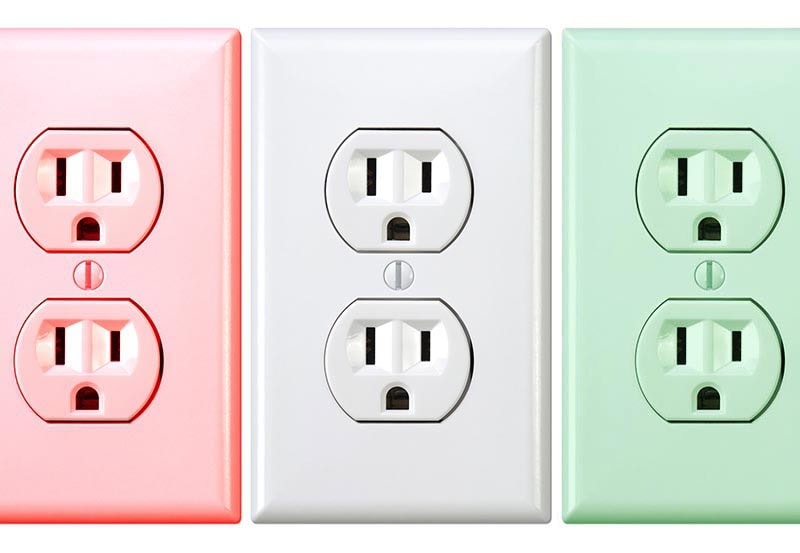
A standard two-prong outlet only has two slots: one for “hot” and one for “neutral.”
The missing piece is the grounding wire. Grounding is essential to provide a safe escape route for electricity in the event of a fault or short circuit.
If an appliance malfunctions in an ungrounded system, that stray electricity will seek the easiest path to the earth—which could easily be you. Beyond the shock hazard, ungrounded outlets are entirely incompatible with modern electronics, which require that third grounding prong to protect sensitive circuitry.
GFCI vs. AFCI vs. Grounded Outlets
When you decide to modernize your home’s electrical system, you will typically choose between three distinct types of upgrades, depending on where the outlets are located:
GFCI
These are the outlets you typically see in bathrooms and kitchens with the “test” and “reset” buttons. A GFCI outlet protects you from shock. If it detects even a tiny change in the current, it cuts the power in a fraction of a second.
These outlets are essential in areas where water and electricity might meet.
AFCI
AFCIs protect your home from fires. An arc fault occurs when a loose or damaged wire causes electricity to arc across a gap. An arc fault creates intense heat that can easily ignite the wall or insulation.
AFCI technology detects dangerous arcs and shuts off power before a fire can start. These outlets require running the third grounding wire to your electrical panel if your existing outlets are not grounded. An alternative is installing AFCI circuit breakers at the electrical panel.
Grounded Outlet
A three-prong outlet with a ground wire diverts stray electrical current to the earth. An electrician must run the new, third wire from the outlet to the electrical panel. That can be disruptive to finished walls.
A code-compliant alternative is installing a GFCI outlet without running a new wire. It will protect against shock but won’t protect your electronic equipment from power surges.
The Advantages of Upgrading Your Electrical Outlets
The primary reasons to upgrade are peace of mind and safety. Beyond that, you’ll gain these benefits:
- Convenience: You’ll be able to use three-prong plugs without adapters.
- Boosted Home Value: If you ever plan to sell your home in [county], modernizing your electrical system is a major selling point that prevents issues during a home inspection.
- Lower Insurance Premiums: Many insurance companies offer discounts for updated electrical systems.
Do You Need to Rewire the Entire House?
The question we hear from homeowners is, “Will you have to tear open my walls to upgrade my outlets?”
It is a completely valid concern. No one wants to deal with the mess and expense of drywall repair. Fortunately, a whole-house rewire is rarely necessary just to update your plugs.
If your wiring is in good condition, we may be able to install GFCI outlets without a ground wire. However, if your wiring is brittle, cloth-insulated, or improperly spliced, we recommend a partial or full circuit rewire.
How Long Does it Take to Upgrade Electrical Outlets?
Updating outlets in a standard home is a relatively quick job. A professional can typically replace outdated outlets in a single day, depending on the size of your home and the number of outlets involved.
Why You Should Schedule an Electrical Inspection
Even if you aren’t planning an extensive update to your electrical outlets, we recommend an electrical inspection every 3 to 5 years, or whenever you move into a new home.
During electrical inspections, our Kappler Mechanical technicians inspect the breaker panel, outlets, wiring, and check for proper grounding and fire hazards.
According to the National Fire Protection Association (NFPA), electrical fires accounted for approximately 13 percent of all home structure fires and 18 percent of home structure fire deaths each year from 2020 to 2024.
An inspection is an essential, proactive step that can prevent major, expensive damage down the road.
Take Your Electrical Outlets to the Next Level
Don’t wait for a flickering light or a tripped breaker to find out your system needs attention. Bring your home’s electrical system into the modern era in Boulder, CO, with upgraded outlets and an electrical inspection. Our Kappler Mechanical electricians are ready to help. Call us at 720-513-6481 or request service online.
Need HVAC Service?
Contact the experts at Kappler Mechanical.
Call us at 720-513-6481!